You’ve probably seen your phone suggest the next word as you type. It feels smart, almost like it reads your mind. But then you use a calculator for basic math, and it just crunches numbers without any flair. So, are algorithms the same as artificial intelligence?
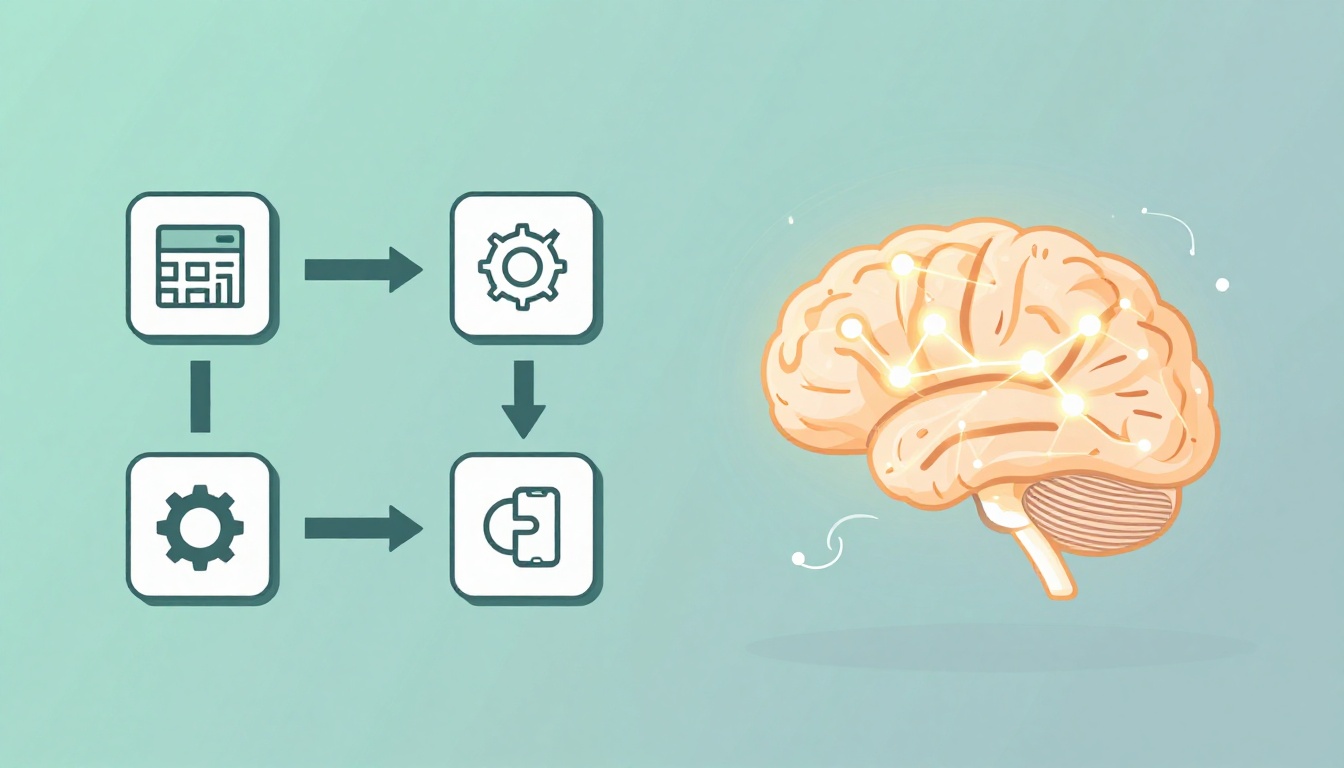
No, they aren’t. Algorithms act like fixed recipes computers follow step by step. AI, however, learns from data, adapts, and gets better over time, much like a chef who tweaks dishes based on taste tests. People often mix up algorithms vs AI because both power tech we use daily. This confusion leads to hype around AI that overlooks the basics.
In this post, we’ll break it down simply. First, we’ll define algorithms with everyday examples. Next, explore how AI builds on them but goes further. Then, compare the two head to head, bust myths, and see their real connection. By the end, you’ll spot the difference between algorithms and artificial intelligence in apps around you. Let’s start with the basics.
What Is an Algorithm, Anyway?
Algorithms form the backbone of computing. Think of them as precise instructions a computer follows to complete a task. You give the same inputs, and you get the same outputs every time. No surprises, no learning involved.
Picture baking cookies. You measure flour, add sugar, mix, and bake at 350 degrees for 10 minutes. Follow those steps exactly, and the cookies turn out perfect. Change nothing, and results stay consistent. Computers work the same way with algorithms. They handle sorting data, basic math, or simple decisions without deviation.
These rules date back to early programming. Alan Turing formalized them in the 1930s, but today they run everything from search engines to traffic lights. Algorithms excel at predictability. Programmers design them for efficiency, so they solve problems fast with minimal resources. Yet, they can’t handle surprises. If rain ruins your picnic plans, the recipe doesn’t adjust; you do.
For more on their role in tech foundations, check Coursera’s guide on AI vs algorithms.

Algorithms power all software because they break tasks into doable steps. Without them, computers would sit idle. They shine in routine jobs where rules never change.
Real-Life Examples of Algorithms You Use Daily
You interact with algorithms constantly, often without noticing. Here are a few simple ones:
- Spell-check in your email: It compares your words to a dictionary list. Matches exactly? It passes. No match? It flags a typo. Same word always gets the same check.
- GPS shortest route: Input start and end points. It weighs distance, traffic rules, and speed limits with fixed math. Plug in the same spots at the same time, get the identical path.
- Online shopping cart total: Adds items, applies taxes and discounts via set formulas. Change nothing, and the price stays locked.
- Traffic light cycles: Sensors count cars. If more than five wait, it switches green. Rules stay rigid, no gut feelings.
These examples show algorithms’ reliability. For student-friendly breakdowns, see examples from Learning.com. They deliver consistent results, which makes them trustworthy for simple tasks.
How Artificial Intelligence Takes Things Further
AI steps beyond algorithms by mimicking human smarts. It processes data, spots patterns, and improves with experience. Algorithms provide the rules, but AI tweaks them based on real-world feedback.
Consider a basic car versus a self-driving one. The basic model follows fixed paths you set. The self-driving car learns from millions of miles driven, avoids potholes it never saw before, and predicts pedestrian moves. AI does this through layers of decision-making that evolve.
Core traits set AI apart. It recognizes images, understands speech, and predicts outcomes. Machine learning, a big AI subset, feeds data into models that adjust weights automatically. More data means better accuracy. In contrast, algorithms stick to their script.
As of March 2026, AI trends lean toward specialized agents. These handle workflows like digital workers, using efficient models for tasks like coding or math.

AI thrives on complexity. It powers recommendations on Netflix or voice assistants like Siri.
Everyday Ways AI Shows Up in Your Life
AI hides in plain sight. Spot it in these spots:
- Photo apps tag faces: Trained on thousands of images, they identify your family instantly. Feed new photos, and accuracy climbs.
- Chatbots on support sites: They learn from past chats to give quicker, smarter replies. Early versions stumbled; now they handle refunds smoothly.
- Fitness trackers predict steps: Analyze your habits, then forecast weekly totals. Miss a day? It adjusts goals on the fly.
- Stock apps forecast trends: Past prices train models to spot rises before they happen.
These tools get sharper with use, unlike static algorithms.
The Magic of Learning: How AI Evolves
AI learns like a kid practicing free throws. Start with data piles. Models spot patterns, like which shots swish. Misses tweak the aim. Repeat, and scores soar.
Machine learning drives this. Algorithms start the process, but AI refines them via feedback loops. No human tweaks needed. In 2026, neuro-symbolic methods mix logic rules with data learning for reliable results. This evolution handles fuzzy real-world messiness.
Spotting the Big Differences Between Algorithms and AI
Algorithms and AI overlap but differ sharply. Algorithms follow rigid steps for known problems. AI adapts to unknowns through learning. Here’s a quick comparison:
| Feature | Algorithms | Artificial Intelligence |
|---|---|---|
| Core Nature | Fixed instructions, no change | Learns from data, self-improves |
| Output | Predictable, same inputs = same results | Adapts, handles variations |
| Best For | Simple, rule-based tasks | Complex, pattern-heavy problems |
| Flexibility | None; breaks on surprises | High; evolves with new info |
| Examples | Spell-check, basic math | Image recognition, predictions |
This table highlights algorithms vs artificial intelligence differences. Algorithms resemble a printed map; AI acts like a GPS that reroutes around traffic. For deeper insights, read AtoZRanking’s breakdown.
AI adds creativity and error recovery algorithms lack.
When Algorithms Shine and AI Struggles
Algorithms win in precision spots. Bank transactions need exact math; one error costs fortunes. Rule checks, like password validation, demand zero flexibility. AI might hallucinate here because it guesses patterns.
Reliability trumps speed sometimes. Algorithms finish fast without data hunger.
Where AI Wins Over Plain Algorithms
AI dominates change. Recognize handwritten notes? Algorithms fail on sloppy writing; AI deciphers after training. Predict weather? Fixed rules miss chaos; AI crunches vast data for forecasts.
In dynamic worlds, AI’s adaptability rules.
Algorithms: The Secret Engine Behind AI
AI relies on algorithms completely. They form the core code AI optimizes. Machine learning algorithms, like neural nets, start rigid but adjust parameters from data.
Spam filters began with rule lists: words like “free money” trigger blocks. Now, AI versions learn user habits, catching sly scams. Generative AI in 2026, like GPT-5.4, uses advanced algorithms for step-by-step reasoning and code.
Without solid algorithms, AI flops. They provide structure; AI adds smarts. See Quinyx on AI, ML, and algorithms.
Busting the Top Myths About Algorithms and AI
Myths confuse folks. Let’s clear them up:
- All algorithms are AI: Nope. Most, like sorting lists, stay basic and static.
- AI needs no algorithms: Wrong. AI builds on them; it just evolves the rules.
- AI always beats algorithms: Not true. Algorithms rule exact tasks; AI errs without good data.
- AI is fully autonomous: It still needs human oversight, especially in 2026’s agent hype.
These mix-ups stem from buzz. Specialized models now clarify lines.
No, Algorithms Aren’t Artificial Intelligence
Algorithms deliver fixed steps for reliable results. AI learns, adapts, and tackles complexity using those steps as a base. The difference between algorithms and artificial intelligence boils down to rigidity versus flexibility.
In 2026, trends like agent teams and efficient models show AI leaning on smarter algorithms for real work. Tech literacy helps you navigate this.
Spot algorithms in calculators, AI in smart replies. Which app surprised you lately? Share in comments. Try tweaking a recipe app versus an AI chef tool. Stay curious.