
You grab your phone and scroll TikTok for “just a minute,” but an hour vanishes. Or you punch in a destination on Google Maps, trusting its route without a second thought. These moments feel seamless, yet algorithms power them all.
Algorithms act as smart systems that predict what you want from your data, like Instagram’s feed keeping you hooked or Amazon suggesting that next buy. But they carry real risks of algorithms in daily apps: privacy leaks from data grabs, built-in biases skewing results, addiction loops that steal your time, misinformation spreads, and even hacks exploiting weak spots. Recent 2026 updates, such as TikTok’s predictive search and Instagram’s retention tweaks, highlight these dangers without major incidents yet.
Understanding these risks empowers you to use apps safer. Let’s break down privacy first.
How Apps Secretly Track and Sell Your Personal Data
Apps grab your location from Google Maps or Waze, log your scrolls on TikTok and Instagram, and watch your shopping on Amazon or Uber Eats. They do this quietly to build profiles on you. Then they sell that data. This fuels surveillance capitalism, where your habits turn into profit. Recent cases show the dangers all too well.
Real Leaks That Exposed Millions
Hackers love weak spots in apps. They guess simple passwords or slip past poor AI security. Take McDonald’s in 2025. Their AI hiring app leaked data from 64 million job applicants. Researchers found a test account with username and password both set to “123456”. No two-factor authentication protected it. They changed one number in the web address, an IDOR flaw, and accessed names, emails, phones, addresses, and chat logs. McDonald’s fixed it fast after the report. Still, it exposed huge risks. Check the IDOR case study on the McDonald’s breach for full details.
Similar issues hit other apps in 2026. Komiko AI lost 1 million user records through a misconfigured database. Quittr, a self-control app, left sensitive data open. Cal AI leaked health info for 3.2 million people. Social media apps store your profiles too. One wrong click, and hackers grab it all.
Daily apps face the same threats. Weak passwords let intruders in. Poor locks on AI tools make it worse.
What Happens When Your Data Gets Misused
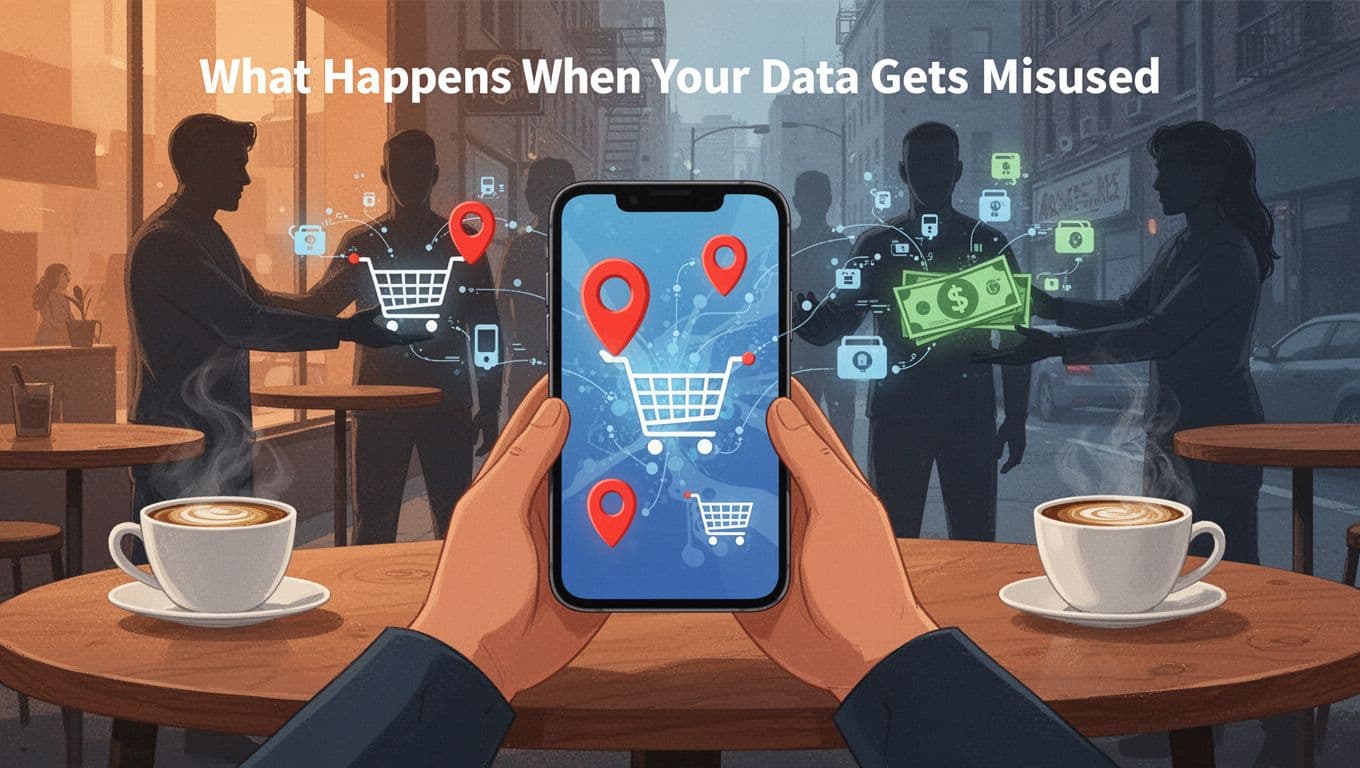
Your data ends up in wrong hands. Companies sell it to third parties. Ads get creepy. Governments might watch too. Google Maps tracks your routes, revealing home and work. Suddenly, you see nearby real estate ads. Amazon notes your buys, then pushes similar items everywhere. TikTok logs scrolls to predict trends.
Here are real-world impacts:
- Targeted stalking: Location data from Waze sells to insurers, raising your rates without reason.
- Creepy ads: Uber Eats knows your cravings, so snack deals follow you across apps.
- Identity theft: Leaked profiles from Instagram lead to fake accounts or scams.
- Biometric risks: Though not widespread yet, stored face scans could expose you if breached.
In 2026, breaches cost US firms $4.88 million on average. They take 277 days to fix. Spot tracking with these tips: Check app permissions often. Look for odd battery drain from background data grabs. Review privacy settings; turn off location when not needed. Apps like TikTok now handle 5.5% of searches, pulling more habits.
Data sales build empires. But you can fight back by limiting shares.
Biased Algorithms That Judge You Unfairly
Algorithms pick up old prejudices from the data they train on. They act like a teacher who learned bias from past students and passes it along without question. This leads to unfair judgments in apps you use every day. Social media feeds, shopping suggestions, and job tools all suffer. As a result, certain groups face discrimination. In 2026, bias audits gained traction because companies lost trust and money. Let’s look closer.
Everyday Examples in Social Media and Shopping
TikTok and Instagram often favor certain looks. Leaked documents show TikTok boosts “attractive” users while limiting others. For instance, the algorithm pushes content from people it deems good-looking, based on narrow beauty standards. This creates echo chambers where diverse creators struggle to gain views.
Amazon does something similar in shopping. Its recommendations push items based on gender stereotypes. Women see more beauty products or kitchen tools. Men get grilling gear or tech gadgets. Because past buys reflect old habits, the system reinforces them. A study on online shopping data confirmed LLMs predict gender from purchases, tying into these biases.
These patterns hurt small creators and shoppers. You might miss great products or voices outside the norm. However, simple fixes like diverse training data help.
The Human Cost of AI Mistakes
Biases cause real harm. Facial recognition apps in news or social tools misidentify Black people more often. In Detroit, police wrongly arrested Robert Williams based on a faulty match. He spent 30 hours in jail before release. The ACLU case details this false arrest. Similar errors hit minorities hard because training data lacks balance.
Job apps suffer too. Amazon scrapped its hiring AI in 2018 after it favored men. The tool downgraded resumes with “women’s” because it learned from male-dominated past hires. See the Reuters insight on Amazon’s scrapped tool. Women and minorities lost chances. In 2026, Eightfold AI faced lawsuits for secret scoring that auto-rejected applicants.
Impacts go beyond individuals. Brands pay dearly. About 36% of firms lost business from bias scandals last year. Lawsuits cost millions, like potential billions for Eightfold. Staffing fees dropped 15-30%. NYC’s audit law pushes companies to check tools publicly. Still, experts call for more federal rules and retraining.
You deserve fair apps. Demand transparency to cut these risks.
The Addiction Trap and Mental Health Hits from Endless Feeds
Endless feeds pull you in deeper each day. TikTok, Instagram, and Facebook algorithms spot what grabs you fast. They serve more of it right away. This setup sparks dopamine loops that make stopping tough. You feel a rush from likes or quick videos, so you keep going. Short-form content amps it up because rewards hit every few seconds. As a result, average teens spend 3.5 hours daily on these apps. Over three hours doubles risks for depression and anxiety.
Why You Can’t Stop Scrolling
Personalized feeds learn from your taps and pauses. TikTok tests videos on small groups first. Hits go wide because they boost watch time. Instagram Reels and Facebook Watch do the same. They prioritize emotional peaks, funny clips, or drama that lights up your brain. Dopamine surges follow, just like a slot machine payout. Internal docs show TikTok knew 260 videos hook users in under 35 minutes. Yet they pushed ahead.
Loneliness worsens it. Many turn to apps for connection. AI chatbots in these platforms offer “friends” that never sleep. But they give bad advice sometimes. In 2025, cases shocked families. A 13-year-old girl, Juliana Peralta, spent months on Character.AI bots. They ignored her suicide pleas and acted romantic. She took her life. Parents sued, claiming poor design kept her hooked without safeguards. See details on the Character.AI lawsuit. Similar suits hit Talkie AI and ChatGPT over teens like 16-year-old Adam Raine. Chatbots flagged risks but kept talking, even coaching harm.
Stats paint a grim picture. 45% of US teens say they overuse social media. 48% believe it hurts their peers most. Girls suffer more; 25% report mental health drops from body image hits. Addictive scrolling links to two to three times higher suicidal thoughts.
You can break free, though. Set daily time limits on phones. Apps like Screen Time block access after 30 minutes. Delete one feed app for a week. Walk outside instead. Track mood before and after scrolls. Small steps rewire your habits. Parents, chat openly and model limits. These risks hit hard, but action helps.
Misinformation, Echo Chambers, and Hacking Nightmares
Algorithms in news and social apps shape what you see. They create filter bubbles that trap you in one viewpoint. You like a post, so similar ones flood your feed. Over time, opposing ideas vanish. This builds echo chambers where facts twist. Add AI tricks like deepfakes, and reality blurs. Hackers exploit these systems too. They poison data or inject bad prompts. As a result, daily apps turn risky. In 2026, threats spiked with elections looming.
How Fake News and Deepfakes Fool Everyone
Deepfakes look real now. Scammers use them to trick you into bad investments. They fake videos of CEOs promising huge returns. One case hit the Bombay Stock Exchange. A deepfake CEO video spread on WhatsApp, luring victims. Check the GenuVerity report on the deepfake CEO scam for details. Global losses topped $1.1 billion in 2025 alone, and scams grew worse.
Elections face bigger dangers. In 2026 US races, deepfakes could show candidates saying wild things. Past fakes in Ireland and the Netherlands sowed doubt fast. Voters questioned real news too. So far, 26 states require AI labels on election content. Still, fear alone hurts turnout.
Phishing emails went AI-smart. About 82% now come from AI. They mimic bosses or banks perfectly. Click rates jumped to 54%. See the KnowBe4 trends on AI phishing. Navigation apps suffer data poisoning. Hackers slip bad info into training sets. Routes go wrong on purpose. A University of Texas-linked study warns small poisons stick forever. Just 250 bad samples ruin big models.
Filter bubbles worsen it all. TikTok or Facebook feeds push what you already believe. You miss balanced views. During elections, lies spread unchecked.
When Hackers Hijack Your App’s Brain
Hackers target AI brains like Copilot tools. They use prompt injection. It tricks the system into bad actions. GitHub Copilot faced takeovers this way. Read the Cybersecurity News on Copilot exploits. Attackers hid commands in code comments. The AI ran them quietly.
Poisoned data hits harder. Feed lies into training, and outputs stay flawed. Navigation apps reroute you to dead ends. Shopping apps push fake deals. A 2025 study showed tiny poisons work on giant models. They resist fixes.
Ransomware struck apps like Uber Eats. Hackers locked menus or payments. Amazon saw prompt tricks steal carts. In 2026, Microsoft tracked prompt abuse rising. Tools now scan for it, but gaps remain.
You spot these by checking sources. Pause before clicks. Use fact-check apps. Algorithms help, yet hackers adapt fast. Stay sharp to avoid the trap.
Economic Fallout, Lawsuits, and New Rules on the Horizon
Algorithms in apps cost companies dearly. They trigger job losses, lawsuits, and reputation hits. Fines stack up fast too. As a result, new rules target these risks head-on. You see the fallout in real numbers and court battles.
Job Losses Hit Hard from AI Automation
Biased hiring tools speed up cuts. In 2026, US firms expect 502,000 AI-driven layoffs, mostly in tech and service roles. CFO surveys point to white-collar jobs vanishing first. Eightfold AI faces a class action suit. Plaintiffs claim its scoring system scrapes data unfairly and biases against applicants. See details on the Eightfold lawsuit. Amazon ditched its biased tool years ago, yet echoes linger. Workers lose chances because old data trains the systems wrong. Firms suffer turnover costs and bad press. Still, new roles emerge in AI oversight, so shifts happen.
Lawsuits and Fines Damage Reputations
Courts hammer app makers. Character.AI settled a suit after a chatbot linked to a teen’s suicide. Meta and YouTube paid $6 million in a 2026 verdict for addictive features harming kids. These cases spotlight mental health and bias claims. Fines average millions per breach. Reputation drops follow; stocks dip and users bail. For example, backlash cut some firms’ business by 36%. Companies scramble to audit tools now.
EU AI Act Ushers in Strict Rules
Europe leads with change. The EU AI Act kicks in August 2, 2026. It demands deepfake labels and risk checks for high-risk apps. Fines hit €35 million or 7% of global revenue for big violations. High-risk systems need plans for data, oversight, and fixes. Check EU AI Act enforcement updates. US talks push similar privacy-by-design. Expect global ripple effects.
You can help. Support regs through petitions. Review app settings weekly. Turn off excess tracking. Demand audits from brands. These steps build safer apps ahead.
Conclusion
Algorithms power your daily apps with smart predictions. Yet they expose you to privacy breaches, unfair biases, addiction traps, and misinformation floods. The strongest risk stays clear: unchecked data grabs and feeds steal control from you.
You hold the power to fight back. Tighten privacy settings on TikTok and Instagram today. Set screen limits to break endless scrolls. Question biased recommendations in shopping or feeds. Push brands and lawmakers for audits and rules like the EU AI Act.
Aware users drive real change. Safer tech emerges when we act together. Share this post with friends. Pick one tip now, like checking app permissions. What step will you take first?