
Picture this. You grab a recipe for grilled cheese, skip a step, and end up with a smoky kitchen disaster. Algorithms work the same way at first. They seem tricky until you break them down.
Algorithms act like step-by-step plans to solve problems. Think of them as recipes for computers or apps. They take inputs, follow exact instructions, and spit out reliable results. Beginners often struggle because textbooks throw math and code at you right away.
Simple examples change that. They show algorithms in your daily life without any tech jargon. You’ll see a sandwich recipe, sorting papers, bubble sort with numbers, Google search, traffic lights, Maps routes, and face recognition. By the end, you’ll spot algorithms everywhere around you.
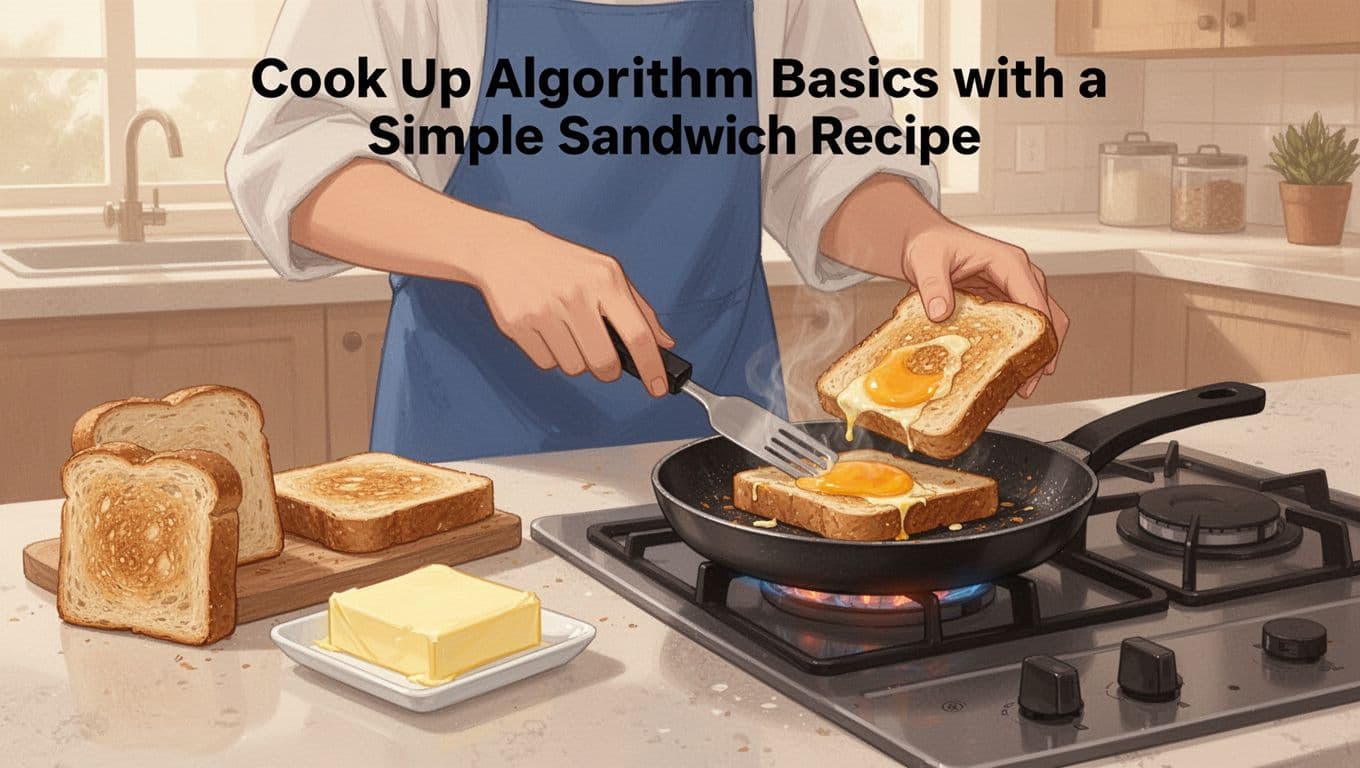
Cook Up Algorithm Basics with a Simple Sandwich Recipe
Start with something tasty. A grilled cheese sandwich makes a perfect first algorithm. You need clear steps to avoid burnt bread or cold cheese.
Gather your inputs first. Grab two slices of bread, cheese, butter, and a pan. These act as the starting materials.
Next, butter one side of each bread slice. Stack cheese between the unbuttered sides. That’s your assembly.
Heat the pan on medium. Place the sandwich butter-side down. Cook until golden, about two minutes. Flip it carefully. Cook the other side the same way. Remove when cheese melts.
Follow these steps, and you get a gooey sandwich every time. Miss one, and results vary. Computers do the exact same thing. They process data through fixed instructions for consistent outputs.
This example highlights key traits. Inputs stay the same, like ingredients. Steps stay precise, no room for guesswork. Outputs match expectations, a tasty sandwich. Real algorithms promise the same reliability.
Try it yourself next lunch. Notice how each step builds on the last. No surprises if you stick to the plan. Humor helps too. Follow right, and you dodge that charred surprise.
For more beginner-friendly visuals on algorithms like this, check out this Medium guide with simple examples.
Why Recipes Beat Textbooks for Learning Algorithms
Recipes shine because you see results right away. Cook it wrong once, fix it next time. Textbooks leave you staring at dry code with no taste test.
They’re forgiving too. Add extra cheese? Still edible. Abstract math lacks that hands-on feel.
Repeatability stands out. Same steps, same sandwich. Efficiency grows as you tweak for speed, like pre-buttering bread.
Every cookbook holds refined algorithms. Chefs test them over years. Now think of your morning coffee routine. That’s an algorithm too.
Pick your favorite recipe. List the steps. You’ll grasp why this method clicks for beginners.
Sort Everyday Messes Using Real Sorting Algorithms
Sorting pops up daily. You organize laundry or books. Computers sort massive data the same way.
Take alphabetizing student papers. Or lining up numbers like 5, 1, 2. These show bucket sort and bubble sort in action.
Bucket sort groups items first. It’s quick for categories. Bubble sort swaps neighbors until order emerges. Simple, but slower for big lists.
Both teach core ideas. They handle inputs, compare, and rearrange for outputs. Time matters too. Bucket wins for mail by first letter. Bubble suits small decks of cards.
Grab playing cards now. Try sorting numbers low to high. Feel the swaps or piles form. Real life mirrors code.
In addition, bucket sort speeds laundry by color piles. Bubble sort lines kids by height, tallest bubbling up.
These methods build intuition. You see why computers pick one over the other based on data size.
For real-life analogies on these sorts, see this Medium post on sorting examples.
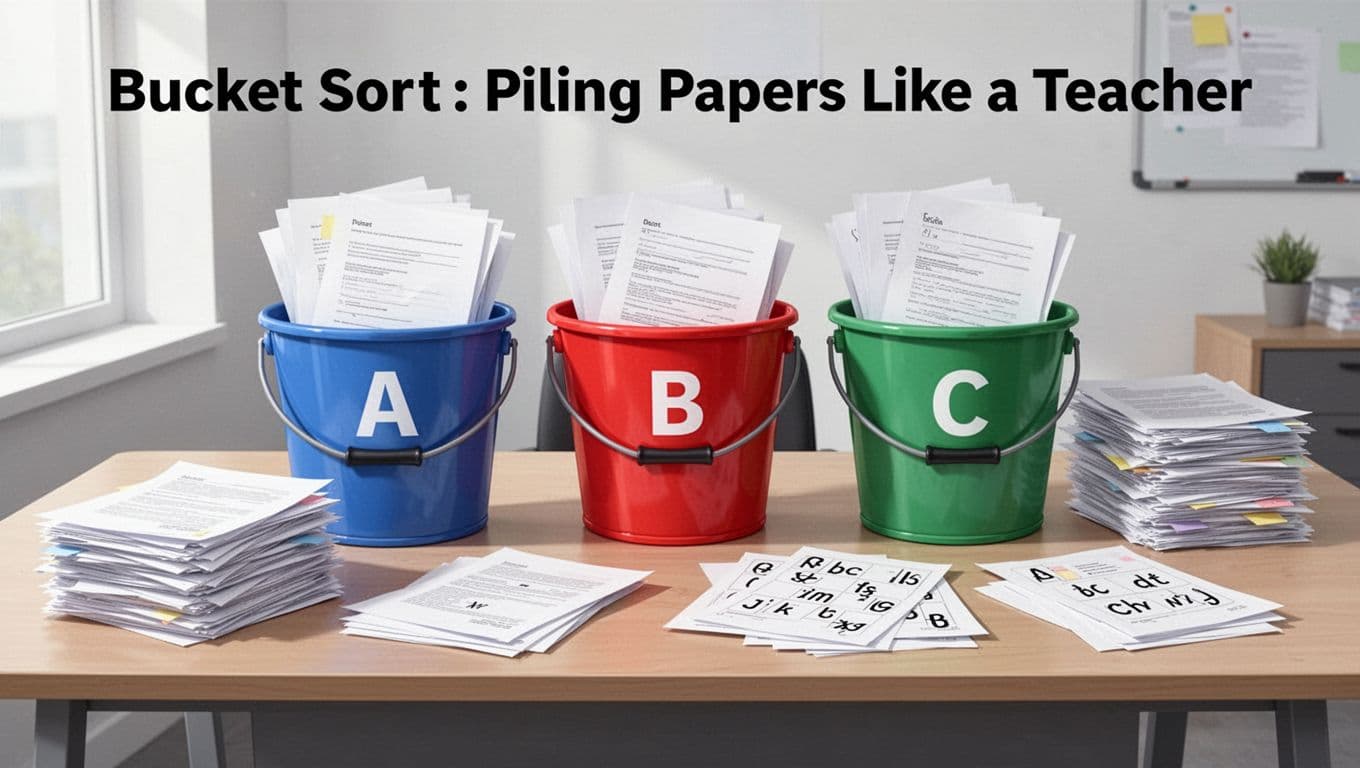
Bucket Sort: Piling Papers Like a Teacher
Imagine grading papers. You have names starting A to Z.
Set out 26 buckets, one per letter. Drop each paper into its first-letter bucket.
Then sort inside each bucket alphabetically. Small piles finish fast.
Pros include intuition. No endless comparisons. It skips pairs, just groups.
Relate it to mail. Sort envelopes by zip code buckets first. Or laundry by size.
Steps stay clear:
- Create buckets.
- Distribute items.
- Sort each bucket.
- Combine.
Fast for even spreads. Teachers use it daily.
Bubble Sort: Swapping Your Way to Order
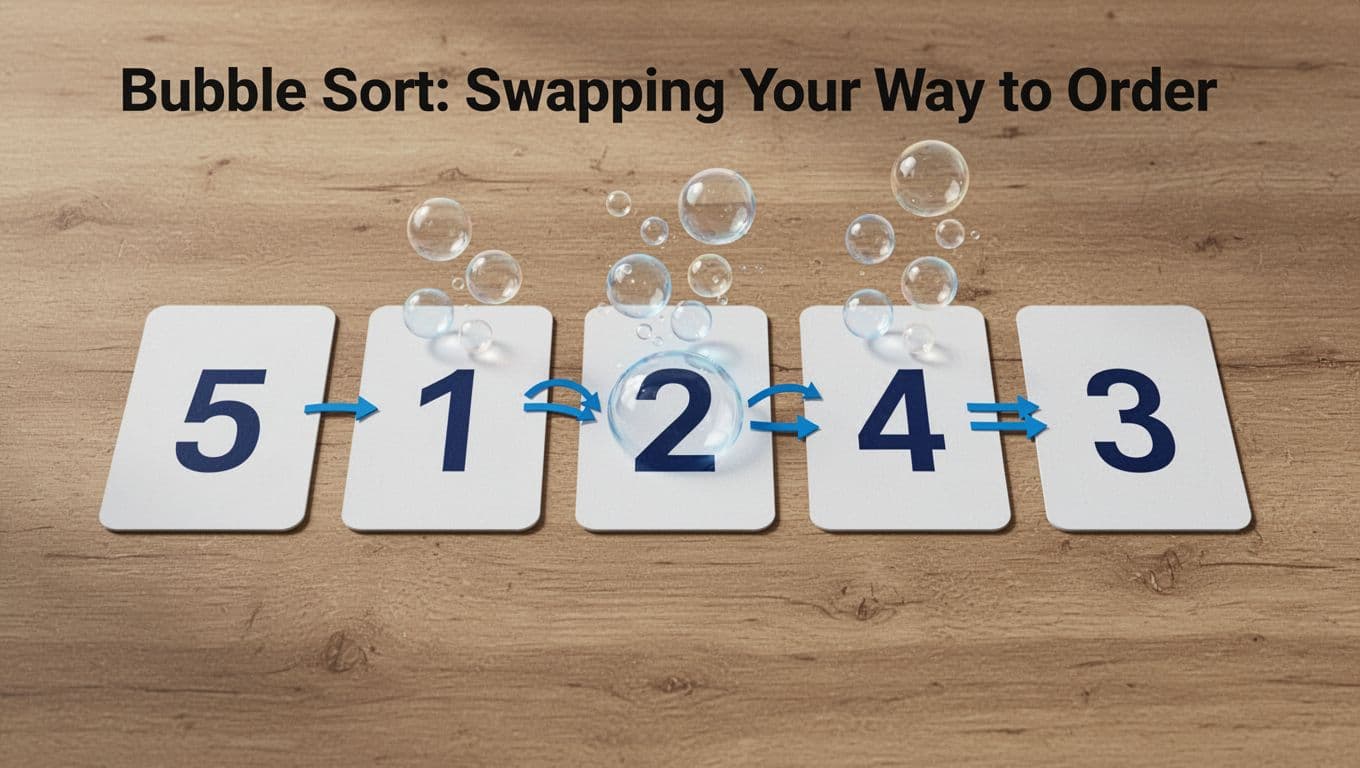
Start with numbers: 5, 1, 2, 4, 3.
Scan left to right. Swap if out of order. 5 and 1 swap to 1, 5, 2, 4, 3.
Next pair: 5 and 2 swap to 1, 2, 5, 4, 3.
Continue: 5 and 4 swap, then 4 and 3 to 1, 2, 3, 4, 5.
Repeat passes until no swaps. Largest numbers bubble to the end first.
Name comes from that rise. Like kids lining up by height, tallest moves back.
Simple to grasp. However, slow for thousands. Still teaches swaps.
Try cards: 5,1,2,4,3. Swap pairs. Watch order emerge.
Spot Algorithms Powering Apps and City Streets
Apps and streets run on algorithms too. You use them without thinking.
Google search parses your query. It matches pages, ranks by relevance. Traffic lights sense cars, adjust greens. Maps find shortest paths. Face recognition matches features.
All follow steps like your sandwich. Inputs in, process, output out. They solve real messes efficiently.
By March 2026, traffic lights sync better. Cities like Baltimore plan full networks. Sensors cut stops 20 to 40 percent. GPS from few cars retimes them.
These make drives smoother. Algorithms power it all.
Google Search and Traffic Lights in Action
Type “best pizza.” Google breaks words. It scans billions of pages for matches.
Then ranks. Factors include links, freshness, your location. Top results pop first.
Every click trains it more. Consistent, fast answers.
Traffic lights work similarly. Sensors count cars. If many wait, extend green.
In 2026, AI predicts flow. It runs scenarios, picks best timing. Omaha upgrades 143 lights this year. Delays drop as a result.
Parallels recipes. Fixed rules, real results. See Google’s AI for traffic lights.
Finding Fast Routes with Map Algorithms
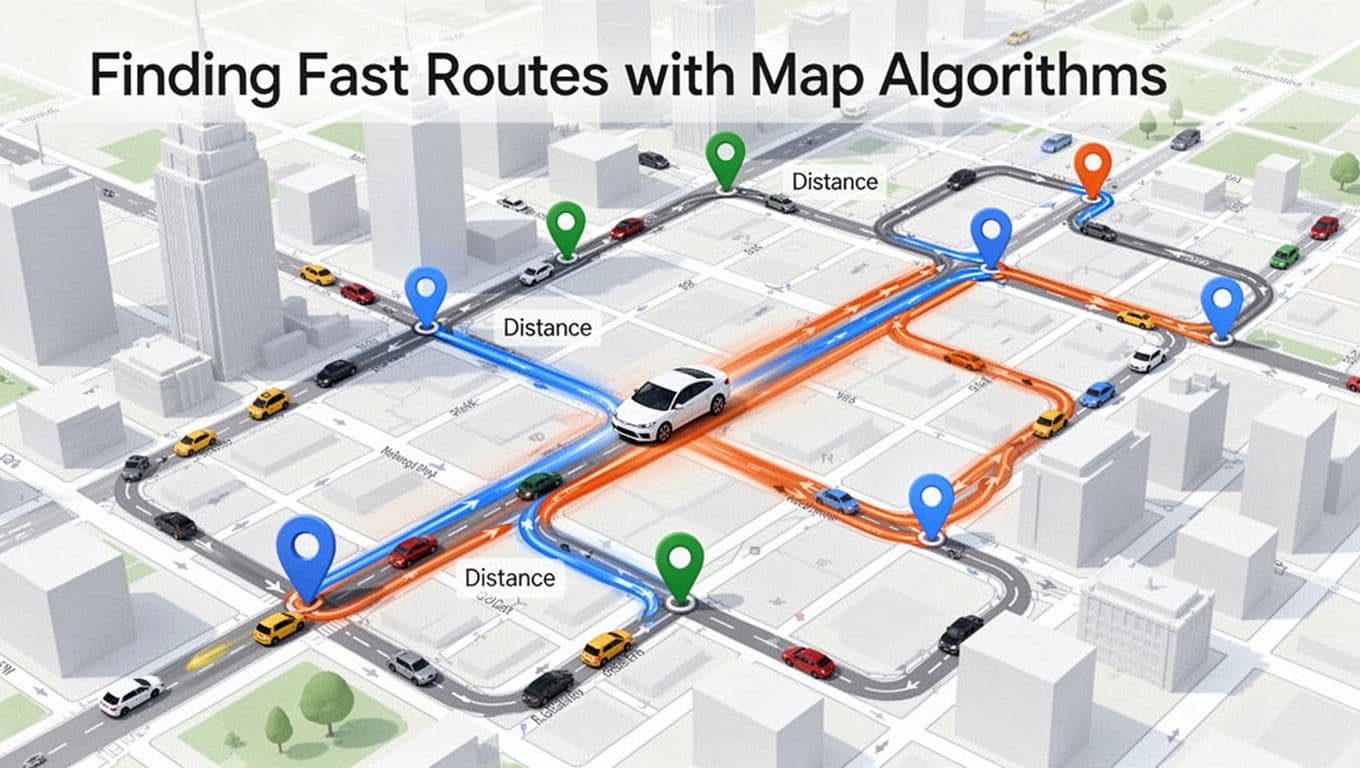
Google Maps treats roads as graphs. Nodes at intersections, edges as streets.
Weights add distance, traffic, turns. Algorithm like Dijkstra finds lowest total.
Highlights your path. Avoids jams using phone data.
In 2026, predictions sharpen. It guesses routes before you search. Like maze solving, but with live updates.
Try a trip. Watch it recalculate. Pure step-by-step magic. Details on Google Maps AI routing.
Face Recognition: Matching Features Instantly
Your phone scans eyes, nose, face shape. Compares to stored map.
Matches points, unlocks in seconds. Adapts to glasses or age.
Steps include capture image, find landmarks, compute distances, score against data.
Privacy matters. It stays on device mostly. Everyday use, like app logins.
Ties back to sorting. Matches features like bucket groups.
From kitchen steps to phone scans, algorithms surround you. Sandwich recipes teach basics. Sorting papers shows organization. Bubble swaps build intuition.
Tech examples prove scale. Google ranks billions. Lights ease commutes. Maps save time. Face ID secures fast.
Spot them now in routines. Your coffee brew? Algorithm. Bedtime steps? Same.
Try hands-on. Sort cards. Cook precise. Watch an app route.
Share your favorite example in comments. What daily task feels algorithmic? Subscribe for more tech breakdowns aimed at beginners.
You grasp algorithms better. Next up, basic coding feels less scary. Go spot more.